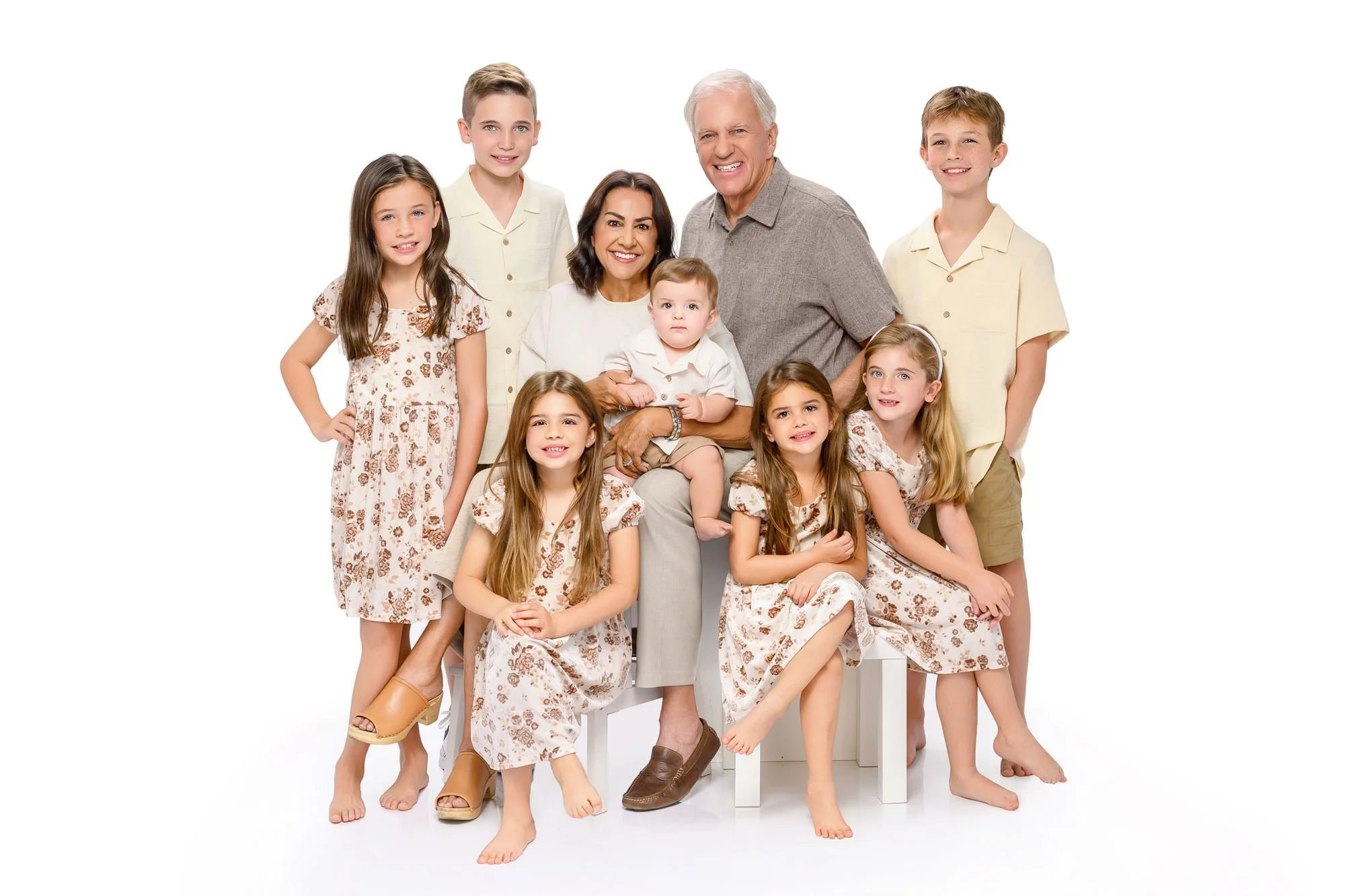
How to Coordinate Outfits Without Looking Over-Styled (And Still Look Amazing in Photos)
The Moment Every Family Dreads…
It always starts the same way.
You’ve booked your portrait session. You’re excited. And then someone in the family asks the question that sends everyone into a quiet panic:
“Wait… what are we supposed to wear?”
Suddenly, the vision you had - a beautiful, relaxed portrait of your family, something worthy of framing above the mantle - feels fragile. Because now you’re standing in front of a closet wondering if navy blue is too dark, if your daughter’s floral dress clashes with your son’s plaid shirt, or if everyone just needs to go buy something new.
And the last thing you want is to end up in the kind of photo where everyone is wearing matching khakis and white shirts on a beach - coordinated to within an inch of their lives, but somehow looking like a stock photo rather than your actual family.
You want something real. Something warm. Something that looks like you.
The good news? There’s a way to get there - and it’s much simpler than you think.

You Don’t Need a Stylist. You Need a Framework.
As a portrait photographer, I walk every single client through outfit coordination before their session. Not because I want to micromanage what you wear, but because I’ve seen firsthand how the right approach to clothing transforms a portrait from “nice” to “stunning.”
The secret isn’t matching. It’s cohesion. And once you understand the difference, outfit coordination stops feeling like a puzzle and starts feeling intuitive.
Here’s the exact framework I share with my clients.
The Portrait Outfit Coordination Guide: Simple Steps for Effortless Style
Step 1: Start with a Color Palette, Not Matching Outfits
This is the single most important shift you can make. Instead of asking “what colors should we all wear,” ask “what palette are we working within?”
A palette is a family of colors that feel harmonious together, not identical. Think of it like a painting: the colors don’t all have to be the same shade to feel like they belong in the same frame.
Some beautiful palette combinations for portrait sessions:
Warm neutrals: cream, camel, terracotta, rust, warm white
Cool earthy tones: sage, dusty blue, stone, soft gray
Rich jewel tones: burgundy, forest green, navy, deep plum
Soft pastels: blush, lavender, pale yellow, mint
Once you’ve chosen your palette, each person can wear a different color, texture, or piece, as long as it lives within that family of tones. The result looks intentional without looking staged.
Pro tip: Pull your palette from something in your home - your living room rug, your favorite throw blanket, or the art on your walls. Your portraits will feel like they belong in your space from day one.
Step 2: Start With One Outfit, Not Everyone at Once
Instead of trying to coordinate everyone at the same time, choose one anchor outfit first.
This is usually:
Mom’s dress (for family sessions)
Your main look (for branding sessions)
Then build everything else around it.
Why this works:
It creates a natural hierarchy, so outfits feel connected, not copy-pasted.
Step 3: Mix Textures and Patterns (Yes, Really)
One of the biggest misconceptions about coordinating outfits for photos is that patterns are the enemy. They’re not - too many competing patterns are the enemy. One or two patterns, balanced with solids, creates visual interest and depth that makes portraits feel dynamic rather than flat.
The rule of thumb: let one person wear a pattern, and keep everyone else in solids that pick up a color from that pattern.
For example: if your daughter is wearing a floral dress with blush and sage tones, your son can wear a sage solid shirt, and you and your partner can wear blush and warm white. The pattern anchors the palette; the solids echo it. The whole group feels cohesive, but no one looks like they’re in uniform.
Textures work the same way. Linen, denim, knitwear, and silk all photograph differently and add richness to a portrait. Mixing textures, a linen shirt with a denim jacket, or a knit sweater with a flowy skirt, keeps the image from feeling one-dimensional.
Step 4: Dress for the Season and the Setting
Your outfits should feel like they belong in the world where your photos are being taken. Heavy wool sweaters look out of place in a sun-drenched garden. Sundresses feel jarring against a moody, overcast backdrop.
Before you finalize your looks, ask yourself: Does this feel right for the season? Does it suit the location? Outfit coordination for portrait sessions works best when the clothing feels like a natural extension of the environment, not a departure from it.
For outdoor fall sessions, lean into warm, earthy tones and layering. For spring or summer sessions in natural light, lighter fabrics and softer palettes tend to photograph beautifully. For studio sessions, you have more flexibility, but rich, saturated colors often translate beautifully against clean backgrounds.
Step 5: Avoid “Special Occasion” Energy
If it feels like:
Prom
A wedding guest outfit
Or something you’d never normally wear
It will photograph that way.
Instead, aim for:
“Elevated version of your everyday style.”
Step 6: Pay Attention to Fit
No amount of beautiful color coordination can compensate for clothing that doesn’t fit well. Ill-fitting clothes read clearly on camera, and they tend to make people feel self-conscious, which shows in the portraits.
This isn’t about wearing anything restrictive or formal. It’s about wearing clothing that fits your body well and makes you feel good in it. When you feel comfortable and confident in what you’re wearing, that ease shows up in the photos.
A few things to watch for:
Avoid overly baggy clothing that can obscure your shape in an unflattering way on camera
Make sure sleeves and hems are the right length, these small details are noticeable in portraits
If you’re wearing something new, do a trial run at home so you know how it feels when you sit, move, and interact
Step 7: Think About Movement, Not Just Looks
Flow matters more than people expect.
Dresses that move.
Sleeves that drape.
Fabrics that catch light.
These details create:
Softness
Emotion
A more editorial, high-end feel
Especially in studio portraits where light is controlled, movement brings the image to life.
Step 8: Avoid Logos and Loud Graphics
Brand logos, graphic tees, and novelty prints tend to pull the viewer’s eye away from faces, which is the opposite of what a great portrait does. They also date quickly, which is something to consider if you’re creating portraits meant to last for years.
Clean, classic pieces, solids, subtle textures, simple patterns, keep the focus on your family and the connection between you. That’s where the magic lives.
Step 9: Coordinate, Don’t Clone
The goal of outfit coordination for portraits is to look like you belong together, not like you’re wearing a costume. Each person should still look like themselves.
That means: if your teenager lives in vintage band tees and ripped jeans, a stiff button-down might make them look (and feel) like someone else entirely. Instead, find a way to honor their personal style within the palette. Maybe it’s a relaxed neutral top and their favorite jeans. Maybe it’s a thrifted jacket in the right tone. When people dress in a way that feels authentic to who they are, the portraits feel authentic too.
The best family portraits aren’t the ones where everyone looks perfectly polished. They’re the ones where you can tell, just by looking, exactly who these people are to each other.
Step 9: Edit. Then Simplify Again
Once you have outfits laid out, step back and ask:
Is anything distracting?
Is one outfit too bold?
Does anything feel forced?
Then remove one element.
The best styling almost always comes from simplifying.

What NOT to Do: Common Outfit Mistakes That Hurt Portraits
Even with the best intentions, a few common missteps can undermine an otherwise beautiful session. Here’s what to steer clear of:
All-white outfits: White can reflect light harshly and cause overexposure, especially outdoors. Off-white, cream, or ivory are much friendlier alternatives.
All-black outfits: Black absorbs light and can lose detail in shadows. One or two people in black is fine, but an entirely black family looks flat in photos.
Neon or very bright colors: These tend to cast colored light onto skin tones and can make the photo feel chaotic. Reach for muted or saturated-but-not-electric tones instead.
Too many competing patterns: One pattern per group is a safe rule, especially for larger families.
Wearing something you’re not comfortable in: Discomfort shows. Choose pieces that make you feel like the best version of yourself.
What Happens When You Get It Right
When outfit coordination comes together, something shifts in a portrait session. People relax. They stop thinking about what they’re wearing and start thinking about each other. The laughter feels easier. The moments feel more real.
And the photos? They look like art.
Not because everyone was perfectly styled, but because the visual harmony of the image lets the viewer focus entirely on what matters: the love between the people in the frame.
That’s what I’m always after in a portrait session. Not perfection. Connection.

Ready to Start Planning Your Session?
If you’re preparing for a portrait session and still feeling unsure about outfits, you don’t have to figure it out alone. As a photographer and an artist, I’m here to help you and guide you to find the right outfit - you can invite me to your closet so I can help you find the right one within the collection you already have or I can provide you a guidelines and color palette with the best option for your session.
Your family is already beautiful. Let’s make sure your outfits say so too.
Reach out here and let’s start planning together.

Frequently Asked Questions: Coordinating Outfits for Portrait Sessions
Should everyone wear the same color for family photos?
Not necessarily. Coordinating within a shared color palette is more effective, and more visually interesting, than having everyone wear the exact same shade. You want harmony, not uniformity.
How many colors should a family wear in portraits?
Aim for three to four colors within a cohesive palette. This creates enough variety to look natural and layered, without so many colors that the image feels chaotic.
Can you mix patterns in family photos?
Yes, with intention. Limit patterns to one or two people in the group, and make sure the other outfits pick up colors from those patterns. This creates visual interest while keeping the overall image cohesive.
What colors photograph best?
Muted, earthy tones and jewel tones tend to photograph beautifully. Avoid neon or very bright colors, which can cast colored light on skin and overwhelm an image. Soft neutrals are always a safe and elegant choice.
What should I avoid wearing for a portrait session?
Avoid logos and graphic tees, overly baggy fits, all-white or all-black outfits for the full group, and anything that makes you feel uncomfortable or unlike yourself.