
A portrait that still feels like your family decades later
Imagine walking past a portrait in your hallway twenty years from now. Your child is grown. The tiny hand that once fit inside yours belongs to an adult. Yet in that photograph, you can still recognize the way your family leaned toward one another, the familiar smile, and the quiet comfort of being together. You notice the people first, not the clothes they wore or the colors that were popular that year.
That is what draws me to black-and-white family photography. As a portrait photographer, I love beautiful color, especially the soft tones of the Florida Gulf Coast. But when a family wants artwork that feels deeply personal and belongs in their home for generations, monochrome portraits deserve serious consideration.
The question is not whether color is beautiful. It is whether removing color helps tell your particular story more clearly. Often, it does.
Why do black-and-white family portraits feel timeless?
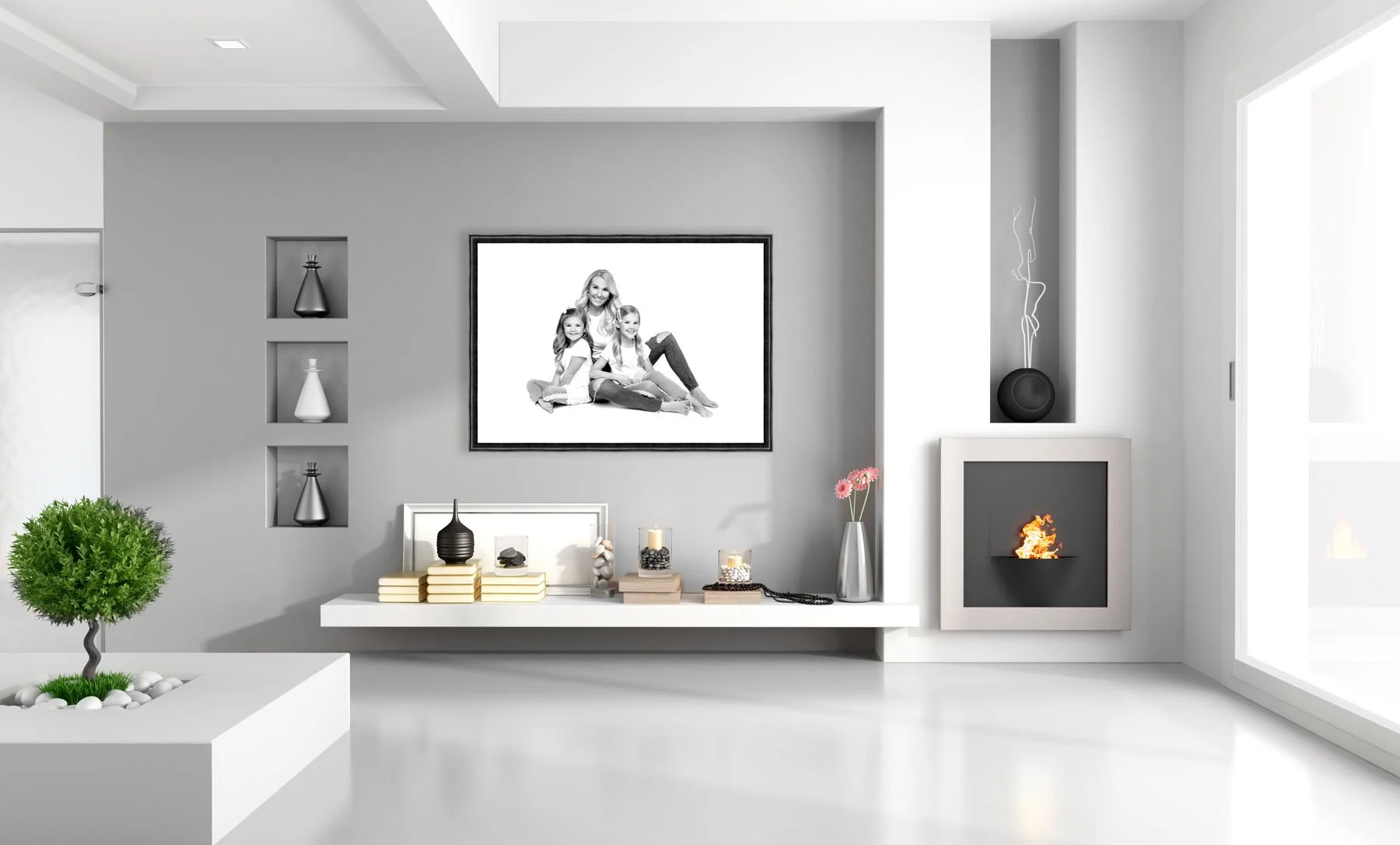
Black-and-white family portraits feel timeless because they reduce visual distractions and emphasize expression, connection, light, shape, and texture. Without color trends competing for attention, viewers are more likely to focus on the people and relationships in the image. Thoughtful lighting, styling, composition, and professional printing help the portrait remain visually compelling as interiors and fashions change.
Timeless does not mean every black-and-white image is automatically beautiful. A photograph still needs intention. The difference comes from what the photographer chooses to reveal and what they deliberately leave out.
1. Emotion becomes the center of the photograph
Think about a mother laughing with her child, siblings leaning shoulder to shoulder, or a father looking at his newborn. In color, you might notice a bright shirt or a busy background first. In monochrome, the eye often travels straight to a face, a gesture, or the small space between two people.
In my studio, I guide families into flattering positions, then watch for the moments that happen between poses. A perfectly arranged portrait is lovely, but an authentic expression can turn a lovely image into something a family treasures. Black and white can give that expression room to breathe.
2. Light and shadow create depth
Monochrome photography is built on tonal relationships. Highlights describe the curve of a cheek; midtones preserve skin detail; shadows add dimension and mood. Directional light can feel sculptural and dramatic, while soft light creates a gentle, intimate portrait.
The goal is not to make every portrait dark or serious. I may use a luminous, airy treatment for a newborn and a richer, more dramatic look for a multi-generation family. What matters is that the lighting serves the people in front of my camera.
3. Fewer visual trends compete with the story
Certain colors, filters, and editing styles can immediately suggest a decade. A carefully made black-and-white portrait is less dependent on those choices. It can sit comfortably beside modern furniture, traditional framing, or a gallery wall that evolves over time.
Clothing and hairstyles can still date an image, of course. Timelessness is not the absence of history. It is the ability of a photograph to remain emotionally relevant long after the moment has passed.
4. The image feels like art, not just documentation
A family photograph records who was there. Fine art portraiture goes further by considering composition, balance, negative space, expression, and how the finished piece will be displayed. In black and white, these decisions become especially visible.
I often ask clients where they imagine enjoying their portraits: above a sofa, in a hallway, in a bedroom, or inside an album. That destination helps guide the framing and orientation of the image before we even begin photographing.
Black and white versus color: which should you choose?
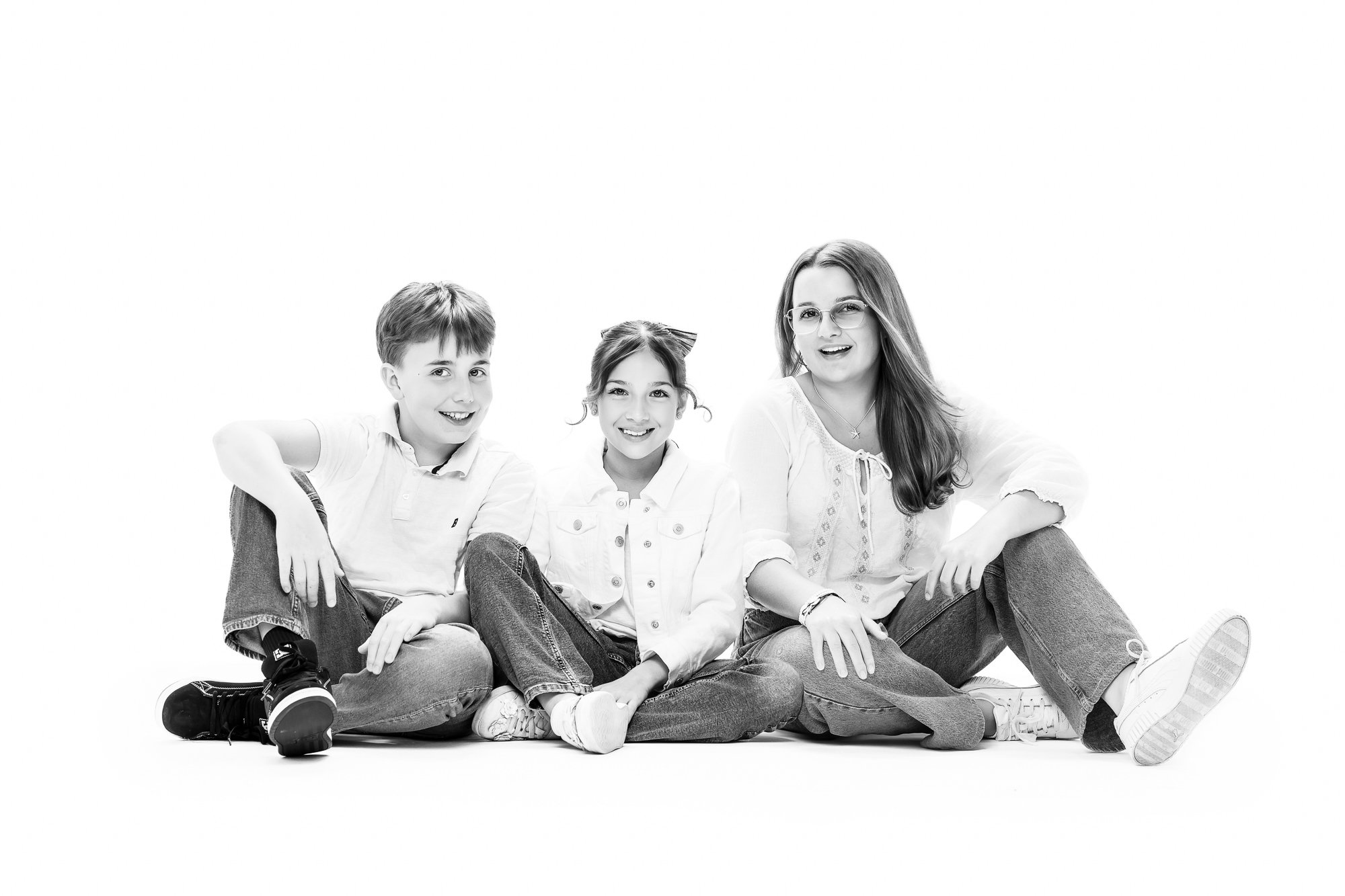
Neither approach is inherently better. They communicate different things. A colorful beach sunset can be part of a family’s story, while a monochrome studio portrait may put more emphasis on relationships and expression. Many families benefit from a thoughtfully planned mix.
Visual emphasis
Black and white: Expression, shape, contrast, connection
Color: Color, atmosphere, environment
Styling
Black and white: Tones and texture matter most
Color: Palette coordination matters more
Display
Black and white: Flexible with changing decor
Color: Can echo a room’s color palette
Best fit
Black and white: Fine art studio portraits, intimate moments
Color: Lifestyle scenes, vibrant locations, meaningful color
My recommendation: choose the look that best communicates what you want to remember, not simply the one that is fashionable on social media.

What makes a black-and-white family portrait truly beautiful?
Intentional lighting, not a one-click filter
Converting a color photograph to grayscale is easy. Creating an exceptional monochrome portrait is more involved. I consider lighting ratios, background separation, skin tone rendering, catchlights in the eyes, and whether the image will retain detail when printed large. A successful conversion may require selective adjustments to individual tonal ranges, not just removing saturation.
Natural expression and gentle direction
Most people tell me they are not comfortable in front of a camera. That is normal. You do not need to know how to pose. I guide hands, shoulders, posture, and spacing so the family looks connected without appearing stiff. Then I encourage small interactions: turn toward your child, share a quiet joke, or simply hold each other.
Texture and contrast without losing softness
Knits, linen, cotton, silk, and simple textured fabrics photograph beautifully when the textures complement rather than overwhelm the faces. I also protect important details in the highlights and shadows. Deep blacks can be elegant, but blocked-up shadows and overly bright skin rarely make a portrait feel more refined.
Retouching that respects real people
My approach to portrait retouching is to refine the presentation without erasing identity. Temporary distractions can be softened while preserving natural features, believable skin texture, and the character of a face. Family photographs should look like your family, not like a heavily altered version of them.
How to plan a timeless black-and-white family portrait session
A successful session starts well before the camera comes out. Here is the planning process I recommend to families in Sarasota, Lakewood Ranch, Bradenton, Venice, Tampa, and nearby Gulf Coast communities.
Step 1: Decide what the portrait should say
Do you want a classic, formal family portrait? A tender motherhood image? A playful grouping of siblings? A quiet photograph of three generations? Pick two or three words such as connected, elegant, joyful, or intimate. Those words become a useful creative compass.
Step 2: Think about where the artwork will live
Measure the wall or identify the room where you would like to display the portrait. A vertical composition may suit a narrow entryway, while a horizontal family grouping may work better above a sofa. If you want an album, we can photograph a range of combinations and moments that tell a fuller story.
Step 3: Choose simple, coordinated clothing
You do not need everyone in matching white shirts. Instead, choose a limited range of light, medium, and dark neutrals. Cream, charcoal, taupe, black, soft gray, and muted earth tones can work well. The exact colors matter less than how they translate into light and dark values.
• Avoid large logos, high-contrast graphics, and distracting lettering.
• Mix subtle textures rather than busy patterns.
• Check that sleeves, necklines, and fit are comfortable when sitting and embracing.
• Bring an alternate layer or outfit if you want both polished and relaxed portraits.
• Try outfits together in natural light and take a quick phone photo in grayscale to compare tonal balance.
Step 4: Plan for children, not against them
Children do not need to perform perfectly for a meaningful family portrait. I build in space for movement, short breaks, and natural interaction. A shy child may need time to warm up. An energetic toddler may give us a beautiful frame while leaning into a parent rather than sitting still on command.
If your family includes a newborn, feeding and comforting breaks are part of the process. For maternity portraits, we consider silhouette, comfort, and the way light shapes the changing body. For senior portraits, we can balance individual personality with a cohesive family collection.
Step 5: Make room for different relationships
Beyond the full family photograph, I encourage smaller combinations: each parent with the children, siblings together, grandparents with grandchildren, and individual portraits. These are often the images families return to most often because they preserve relationships in a very personal way.
Step 6: Select the finished pieces with intention
The session is only one part of the experience. At the image-selection stage, compare expressions, grouping, composition, and how the portraits work together. Rather than choosing dozens of near-duplicates, look for a collection with variety and emotional meaning. Consider a statement wall portrait, smaller companion pieces, or a fine art album.

Studio portraits or Gulf Coast outdoor portraits?
For a refined black-and-white look, a studio gives me precise control over light, backdrop, and distractions. It is especially helpful for multi-generation groups, modern family portraits, and elegant maternity or motherhood images. My studio is in Lakewood Ranch, convenient to Sarasota and Bradenton families.
Outdoor photography can be just as meaningful. A Sarasota shoreline, Venice beach, or other Florida Gulf Coast setting can provide movement and atmosphere. But if the purpose is a highly graphic monochrome portrait, I look carefully at the sky, wind, background, and time of day. The best location is the one that supports your story.
Common mistakes to avoid
• Assuming black and white fixes poor lighting. Flat or harsh light may still be unflattering after conversion.
• Choosing outfits by color alone. Two very different colors may reproduce as nearly identical gray tones.
• Overediting skin or eyes. Extreme contrast and aggressive smoothing can make portraits look artificial.
• Trying to force every child into one perfect pose. Genuine interaction often produces stronger expressions.
• Ignoring the final print size. A composition that works on a phone may not work above a fireplace.
• Printing without checking quality. Paper, finish, tonal depth, and framing influence how a monochrome image looks in your home.
How to display black-and-white portraits as lasting family artwork
One large statement portrait can create a quiet focal point in a living room. A series of three related images can tell a story down a hallway. A fine art album can preserve the smaller interactions that would otherwise remain unseen on a hard drive. For an especially cohesive result, choose consistent matting, frame finishes, and spacing.
I encourage families to think beyond today’s wall color. Neutral framing and thoughtful scale usually adapt more easily as a home changes. Professional-quality printing also matters: subtle gradations in skin and shadow should remain visible, not collapse into muddy gray or harsh black.
Digital files are useful for sharing and backup. Finished artwork has a different role. It becomes part of daily life, something your children see as they grow and something you can pass down.
When should you schedule family portraits?
There is no perfect age or season. A newborn changes in weeks, young children change in months, and teenagers may soon leave for college. Grandparents and extended family make the timing even more meaningful. If you have been waiting until everyone feels ready, consider whether that day will ever arrive.
I often remind parents that the portrait does not need to document a perfect family. It needs to document your family, as you are together right now. The most valuable photograph is often the one you decided not to postpone.

Frequently asked questions
Are black-and-white family portraits outdated?
No. A thoughtfully lit and composed monochrome portrait can feel classic and contemporary at the same time. Its lasting appeal comes from human expression and intentional design, not a particular editing trend.
Do black-and-white portraits look good in modern homes?
Yes. Their neutral palette often works well with minimalist, coastal, traditional, and transitional interiors. Scale, framing, and placement still matter.
What colors should we wear for black-and-white family photos?
Choose coordinated neutrals and consider tonal contrast rather than exact color matching. Avoid large logos and busy prints. I can help refine outfits during planning.
Is a studio better than the beach for black-and-white photos?
A studio offers greater lighting control and a clean background. The beach can add movement and meaningful scenery. The right choice depends on the feeling and final artwork you want.
Can you include both black-and-white and color images?
Often, yes. A mixed collection can give you classic monochrome artwork and color photographs that preserve the atmosphere of a location. Discuss your preferences before the session.
Do black-and-white photographs flatter different skin tones?
They can beautifully represent a wide range of skin tones when lighting and tonal editing are handled with care. The photographer should preserve dimensionality and natural detail rather than apply one preset to everyone.
How many people can be included in a family portrait?
Immediate families and multi-generation groupings can both be planned. The number of people affects posing, spacing, lighting, and artwork dimensions, so share your group size during consultation.
What is the best way to print black-and-white family portraits?
Choose a professional print process with reliable tonal gradation, appropriate paper or fine art finish, and framing that protects the work. Review a sample or consult your photographer before ordering a large piece.
How far in advance should we book?
Booking early gives you more flexibility for planning outfits, family schedules, and any special artwork goals. Reach out as soon as you have a season or milestone in mind.
Key takeaways
• Black and white directs attention toward expression, connection, light, and form.
• Timeless results depend on professional lighting, composition, restrained editing, and printing.
• Choose clothing by tonal value and texture, not by matching colors alone.
• Plan your portraits around the relationships you want to remember and the artwork you want to display.
• The right time to photograph your family is while you are together in this chapter of life.
Let’s create something your family will treasure
If you have been imagining a family portrait that feels like a piece of art, I would love to help you plan it. We can talk through your family, the look you love, clothing, session style, and how the finished portraits could live in your home. My goal is to make the process comfortable and create photographs that become more meaningful with time.
Schedule a consultation with Sylwia Ok Photography through https://www.sylwiaok.com/ and let’s design your black-and-white family portrait experience.
About Sylwia Ok
I’m Sylwia Ok, a Master Photographer and Certified Professional Photographer, and the owner of Sylwia Ok Photography. I specialize in professional headshots, personal branding, and fine art portrait photography, creating thoughtful imagery for both business and home. My studio is located in Lakewood Ranch, Florida, and I serve families and professionals throughout Sarasota, Bradenton, Lakewood Ranch, Venice, Tampa, and surrounding Gulf Coast communities. Whether you are envisioning a timeless family portrait or a complete collection of custom artwork, I invite you to schedule a personal consultation at https://www.sylwiaok.com/.
KEYWORDs: black-and-white family portraits, timeless family portraits; black and white family photography; fine art family portraits; monochrome family portraits; Sarasota family photographer; Lakewood Ranch family photographer; studio family portraits; black and white wall art; family portrait photography Florida Gulf Coast
