
The photo request that arrives at the worst possible moment
Imagine this: your book launch is approaching, a conference organizer has confirmed your keynote, or a podcast producer has just invited you to be a guest. The opportunity is exciting. Then comes the email: “Could you send a high-resolution headshot, preferably with room for text, by tomorrow?”
You open your camera roll. There is a nice vacation photo, a cropped image from a networking event, and a professional portrait taken years ago. None quite fits. The problem is not that you have no photos. It is that you do not have the right photographs for the places your name is about to appear.
I am Sylwia Ok, owner of Sylwia Ok Photography in Lakewood Ranch, Florida. I photograph professionals who need to look credible and approachable long before they walk into a room. For authors, speakers, experts and podcast guests, I think beyond the single flattering portrait. I think about where that image will live, who will crop it, and what it needs to communicate at a glance.
A thoughtfully planned media kit makes your next opportunity easier to say yes to. You can send the right image quickly, look consistent across platforms, and give editors and event teams assets they can actually use.
What is a media kit headshot?
A media kit headshot is a professionally photographed portrait prepared for publicity uses such as author biographies, book jackets, speaker pages, press releases, podcast guest announcements and event promotions. Unlike a single social profile photo, a useful media kit includes complementary expressions, orientations, crops and file versions.
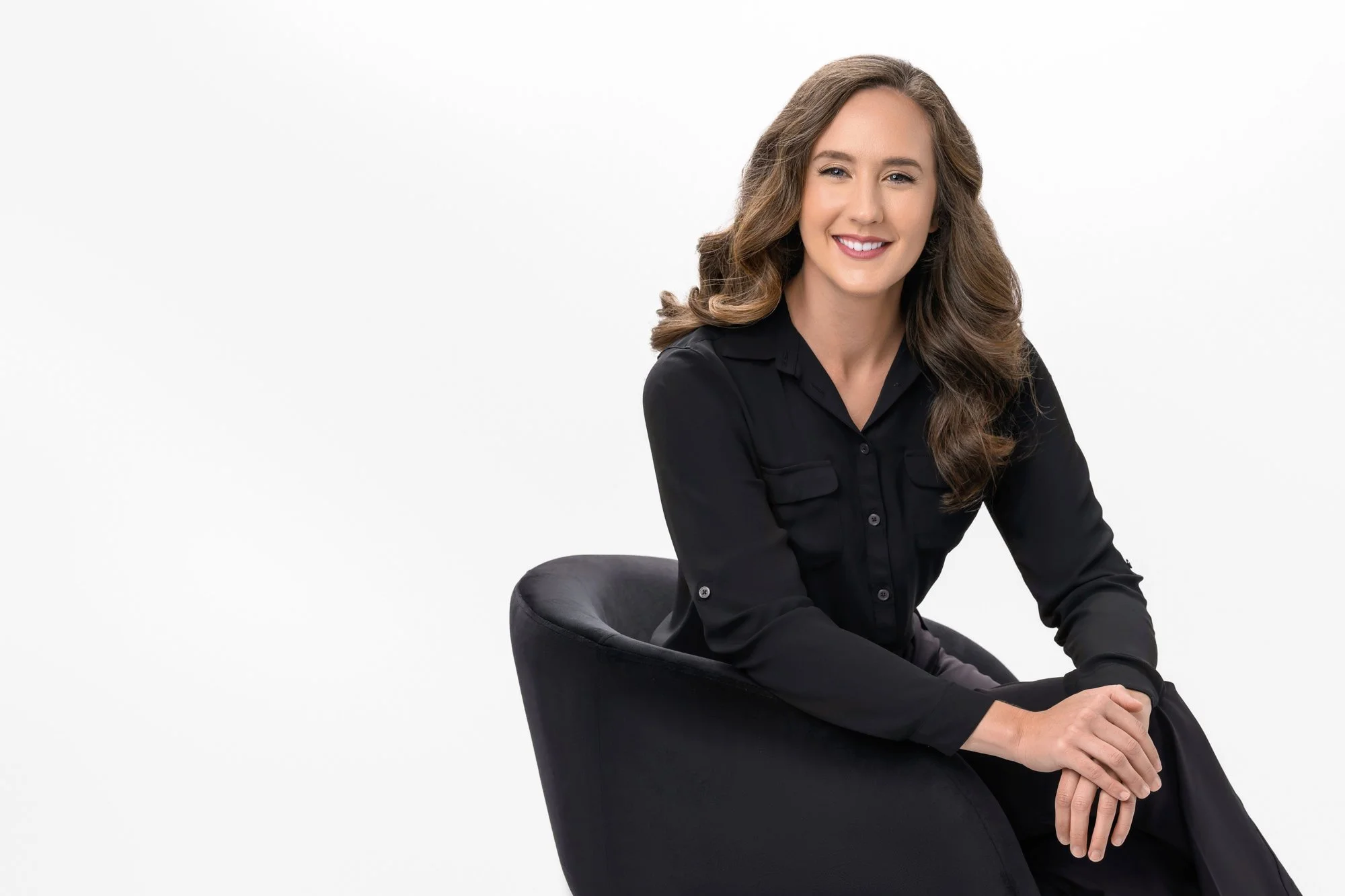
My simplest recommendation is to start with one unmistakably recognizable, polished headshot, then add a warmer alternative and a wider portrait with intentional negative space. Those three images solve many common publicity requests, although an active speaker or author may benefit from a broader branding library.
The five places your media kit photographs need to work
1. Book jackets and author bios
Your author portrait may appear on a printed jacket flap, back cover, publisher website, retailer listing or author page. Each has a different crop and visual mood. A thoughtful literary portrait can feel intimate, intelligent, energetic or quietly authoritative, depending on your genre and audience.
For a book jacket, I prefer a clean composition, flattering directional light and an expression that feels unmistakably like you. A mystery writer may choose a more atmospheric portrait; a business author may need clarity and confidence; a children’s author may benefit from warmth and playfulness. The photograph should support the book’s positioning without becoming a costume.
Before the session, ask your publisher or designer for the intended trim, layout, resolution and color requirements. Do not assume a square LinkedIn crop will translate well to a narrow jacket flap. Leave enough breathing room around the head and shoulders so the designer has choices.
2. Speaker profiles and conference websites
Conference organizers often place dozens of speaker photos into the same grid. Your portrait needs to read clearly at a small size, look current, and convey a sense of presence. This is where a direct gaze, strong posture and an expression that balances authority with approachability can make a difference.
I usually suggest a classic vertical portrait and a square-friendly crop. If you are regularly booked for keynotes, workshops or panels, add a wider image that gives organizers room for your name, talk title, date and sponsor logos. Your speaker image should also match the person the audience meets on stage.
3. Press releases, interviews and editorial coverage
Journalists and communications teams need images that are easy to download, properly credited and suitable for publication. A tight portrait works for a small author byline; a horizontal environmental image can be useful for an online feature. Some publications request unbranded images without text or logos.
I recommend keeping an editorial-ready folder with a clean portrait, a wider alternative, photographer credit and clear usage information. A media kit should remove friction for the editor, not create another email chain. Always confirm the rights granted for editorial and promotional use with your photographer.
4. Podcast guest graphics and episode announcements
Podcast producers frequently create square cover graphics, vertical social stories, landscape video thumbnails and promotional posts. If the only photo you send is tightly cropped at the shoulders, the producer may have to cut off your hair or squeeze text across your face.
This is why I photograph some frames with negative space to one side and others with a little more room above the head. I also capture more than one expression: a confident smile for an upbeat conversation, a thoughtful look for a serious topic, and a relaxed image for a more personal interview. The goal is consistency without making every announcement identical.
5. Event promotions, workshops and media appearances
A local bookstore appearance in Sarasota, a professional association event in Bradenton or a Tampa conference may each require different artwork. Event banners, email headers, flyers, stage slides and social graphics do not share the same proportions.
A wider portrait with a simple background is especially valuable. Give the designer usable empty space, but do not bake text into your master photo. Event teams can then adapt the same photograph to their own branding, sponsor marks and changing dates.

Media kit image checklist: what to photograph and deliver
Classic head-and-shoulders
Best use - Author bio, press, speaker directory
Planning note - Neutral background; eyes clearly visible
Warm alternative
Best use - Podcast guest posts, social introductions
Planning note - Genuine, approachable expression
Vertical mid-length portrait
Best use - Book jacket, speaker one-sheet
Planning note - Leave room for flexible cropping
Horizontal portrait
Best use - Event banners, web headers
Planning note - Negative space for typography
Environmental branding image
Best use - Features, website, media stories
Planning note - Show context without distracting props
Square-safe version
Best use - Podcast tiles, directories
Planning note - Check face and hair at thumbnail size
The exact number of final files depends on your booking, licensing and the needs of your publisher or organizer. Ask for export options rather than assuming one JPEG can do every job.

Headshot versus personal branding photography: which do you need?
A headshot session concentrates on your face, expression and a polished professional introduction. A personal branding session builds a more varied visual story through wardrobe changes, wider compositions, working environments and intentional props. Neither is automatically better. The right choice depends on how often you publish, speak and promote your work.
If you have one upcoming guest appearance and need a reliable image for a bio, a focused professional headshot may be enough. If you are launching a book, building a speaking business, promoting a podcast and publishing content throughout the year, a branding session often gives you much more flexibility.
I approach this in much the same way I plan business photography for entrepreneurs and corporate headshots for teams: the final images must serve real communication goals. For more context, explore my headshot photography services and my article on choosing between a headshot and a personal branding session.
Related reading: Professional Headshot Photography | https://www.sylwiaok.com/sarasota-headshots/
Related reading: Headshot or Personal Branding Session: Which One Is Right for You? | https://www.sylwiaok.com/blog/headshot-or-personal-branding-session-which-one-is-right-for-you
How I plan a media-ready photography session
Step 1. Start with your next six to twelve months
Before we discuss clothing or backgrounds, I want to know what is coming. Is a publisher requesting a jacket portrait? Are you submitting conference proposals? Will you appear on multiple podcasts? Do you need a speaker one-sheet, website hero image or paid advertising creative? Your answers shape the shot list.
Step 2. Identify the impression you want to make
Three useful words can guide the session: perhaps knowledgeable, welcoming and bold; or thoughtful, artistic and grounded. I then translate those qualities into expression, lighting, posture, styling and background. Professional does not have to mean stiff, and personable does not have to mean casual.
Step 3. Build a short, purposeful shot list
• One polished hero headshot with direct eye contact.
• One friendly expression for interviews and podcast announcements.
• One more reflective or editorial portrait.
• One vertical frame with generous crop room.
• One horizontal frame with clean negative space.
• Optional working or environmental images for a broader personal brand.
We do not need twenty nearly identical smiles. We need meaningful variety that lets each photograph do a different job.
Step 4. Choose wardrobe and backgrounds for longevity
I usually favor well-fitting solid colors, refined textures and clothing that aligns with the audience you want to reach. A jacket can communicate leadership; a soft knit can feel more conversational. Bring options if your session allows it. Avoid tiny patterns that create visual interference, distracting logos and overly seasonal pieces that date the image quickly.
Background choice matters just as much. Simple backgrounds travel easily into graphic layouts. A carefully selected environmental backdrop can add personality, but it should not compete with your face. If your book or business has an established palette, we can consider how the colors will work together.
Step 5. Photograph for the crop, not only for the camera
During a session, I pay attention to the edges of the frame, headroom, shoulder placement and the direction you face. A photograph that looks beautiful full-screen can fail once an event designer adds a headline. Creating space deliberately is much more effective than trying to invent it afterward.
Step 6. Select, retouch and organize your final assets
My approach to professional retouching is to refine distractions while preserving the features that make you recognizable. I want your portrait to look like you on a very good day, not a different person. Once your selected photographs are ready, organize them into a clearly named folder with file guidance and credit information.
Related reading: How to Choose a Headshot Style That Matches Your Career Stage | https://www.sylwiaok.com/blog/how-to-choose-a-headshot-style-that-matches-your-career-stage
Related reading: Preparing for a Successful Headshot Session | https://www.sylwiaok.com/blog/preparing-for-a-successful-headshot-session-the-ultimate-guide
File formats, resolution and licensing: the practical details
A gorgeous portrait is only useful if it reaches the right person in the right form. I suggest keeping full-resolution masters alongside web-optimized exports. JPEG is widely accepted for publicity; PNG can be useful for certain digital workflows. Transparent cutouts, CMYK conversions or exact dimensions should be requested only when a designer actually needs them.
For print, ask the publisher or printer for the required pixel dimensions, color profile and effective resolution at final placement size. “300 dpi” by itself does not tell you whether a file contains enough pixels. For digital use, follow the platform or organizer’s current specifications instead of relying on a universal size.
Use straightforward file names such as Firstname-Lastname-Author-Headshot-Vertical.jpg. Include a short note with the photographer credit, approved uses and contact information. Copyright and license terms matter: purchasing a portrait does not automatically transfer copyright or grant every conceivable commercial use. Clarify intended media-kit, editorial, promotional, advertising and book-cover uses before publication.

Seven common mistakes that make publicity harder
• Sending a years-old headshot that no longer resembles you.
• Providing only one tightly cropped square image.
• Choosing a busy background that makes event typography unreadable.
• Using heavily filtered or over-retouched portraits.
• Sending a screenshot or social-media download instead of an original export.
• Forgetting to check licensing, photographer credit or publisher specifications.
• Waiting until the press deadline to decide what your professional image should say.
One more subtle mistake is choosing a portrait only because you personally like it. I always encourage clients to consider how the intended audience will experience the image. A photograph can be beautiful yet still feel wrong for a keynote stage, literary festival or business podcast.
What should you include in a complete media kit?
Photography is one part of a practical press kit. Pair your portraits with a short and long biography, a clear professional title, speaking topics or book description, approved links, contact information and relevant publicity assets. For authors, include publisher-approved cover art. For speakers, include talk descriptions and organizer-friendly introductions. For podcast guests, provide a concise bio and suggested discussion topics.
Keep the kit in a shareable folder or dedicated website page. Separate “high-resolution print” and “web/social” files, and avoid burying your strongest headshot among dozens of outtakes. A well-organized kit respects the time of busy producers, publicists and event coordinators.
Why local expertise matters even when your audience is national
You may be based in Lakewood Ranch and speaking to an audience across the country. Or you may be a Sarasota author preparing for a bookstore launch in Venice, a Bradenton entrepreneur appearing on a podcast, or a Tampa consultant promoting a regional conference. Your media presence can travel far beyond the Florida Gulf Coast, but the photography process should still feel personal and convenient.
At my Lakewood Ranch studio, I can guide you through wardrobe, expression and image selection with the final applications in mind. I also create personal branding and business photography when a project calls for a more expansive story. And because my work includes fine art portraits, I care deeply about subtle expression, flattering light and portraits that remain meaningful beyond the immediate campaign.
For readers exploring other areas of my studio, my family portraits, fine art portraits, senior portraits, maternity portraits and newborn photography reflect that same portrait-focused approach. Those services are separate from a media kit, but they show the breadth of the portrait work I create for business and home.
Frequently asked questions about media kit headshots
How many headshots should an author or speaker have?
I recommend at least three complementary options: a clean primary headshot, a warmer alternative and a wider portrait with crop room. Frequent speakers and podcast guests may benefit from more variety.
What kind of photo is best for an author book jacket?
Choose a current, high-resolution portrait that matches your genre and public identity, with enough space for the designer’s layout. Confirm the publisher’s technical and licensing requirements first.
Can I use the same headshot for LinkedIn, my book and podcasts?
Often yes, provided the crop, resolution and license fit each use. However, a single tight image rarely works equally well for a jacket flap, podcast tile and wide event banner.
Should speaker headshots be formal or approachable?
Usually both qualities matter. The right balance depends on your field and audience. I often photograph one more authoritative expression and one relaxed, welcoming alternative.
Do podcast guest photos need a transparent background?
Not necessarily. Many producers prefer a clean, high-resolution original and create their own crop. If a transparent cutout is requested, confirm that deliverable and its terms before your deadline.
What should I wear for author and speaker headshots?
Choose clothing that feels authentic to your public role, fits beautifully and complements your brand palette. Solid colors and simple shapes generally offer more flexibility for promotional graphics.
How often should I update media kit portraits?
Update whenever your appearance, positioning or brand changes significantly, or when existing photos no longer represent you accurately. For highly visible professionals, reviewing the library each year is sensible.
Do I need a full branding session or just a headshot?
If you mainly need one professional bio image, a headshot session can work. If you need book promotion, recurring podcast graphics, website banners and social campaigns, consider a personal branding session.
Can I book media kit headshots near Sarasota or Lakewood Ranch?
Yes. I photograph professionals at my Lakewood Ranch studio and work with clients from Sarasota, Bradenton, Venice, Tampa and nearby Gulf Coast communities. Contact me to discuss your intended uses and the right session.

Key takeaways
• Plan your portrait library around real publicity placements, not just one flattering profile picture.
• Prioritize a recognizable hero headshot, a warm alternative and a wider composition.
• Create vertical, horizontal and square-friendly options with intentional crop room.
• Confirm file requirements, usage rights and credit details before publication.
• Keep your media kit organized so you can respond quickly when an opportunity arrives.
Ready for a media kit that is ready when opportunity calls?
Your next invitation should bring excitement, not a frantic search for a usable photograph. Whether you are preparing a book launch, updating your speaker profile or saying yes to more podcast interviews, I would love to help you build portraits that look like you and work beautifully across your publicity materials.
Schedule a consultation with Sylwia Ok Photography. Tell me where your images will appear, what you want them to communicate and what deadlines are ahead. Together, we can choose the right headshot or personal branding experience and create a clear plan for your media-ready portraits.
Start here: https://www.sylwiaok.com/sarasota-headshots/ | https://www.sylwiaok.com/ | 941-224-0550
About Sylwia Ok
I am Sylwia Ok, a Master Photographer and Certified Professional Photographer specializing in professional headshots, personal branding and fine art portraits. I own Sylwia Ok Photography, a portrait studio located in Lakewood Ranch Corporate Park in Sarasota, Florida. My work combines thoughtful planning, professional lighting, guided posing and natural retouching to create images that serve both business and personal stories.
I welcome clients from Sarasota, Bradenton, Lakewood Ranch, Venice, Tampa and communities throughout the Florida Gulf Coast. If you are ready for a polished author portrait, confident speaker headshot or flexible media kit image library, I invite you to schedule a consultation. Learn more about me at https://www.sylwiaok.com/about.
keywords: media kit headshots, author headshots; speaker headshots; podcast guest headshots; professional author portraits; speaker profile photography; media kit photography; book jacket author photo; press kit photos; podcast guest photo; personal branding photography Sarasota; headshot photographer Lakewood Ranch; professional headshots Sarasota; conference speaker photos; publicity portraits.
